CNC Drill Bit Types: Twist, Carbide, Deep-Hole & More — With Selection Tips
Basic Functions and Applications of Drills
Drills are among the most commonly used and versatile cutting tools in metalworking and machining. Their primary function is to create precise and required holes in various materials. These holes may serve for part assembly, screw fastening, oil passages, or act as reference points for subsequent machining. Therefore, the quality of drilling directly affects overall machining accuracy and stability. Different types of drills are designed for specific hole diameters, depths, and workpiece materials. Choosing the wrong drill can reduce machining efficiency, increase tool wear, or even lead to scrapped parts. In CNC high-speed machining, stability and efficiency are critical competitive factors. For manufacturers, drills are not just tools—they are a central link between machining quality and productivity.
Basic Structure of Drills
Although drills appear simple, their structural design contains key factors that influence cutting performance:
‧Drill Point: Responsible for penetrating the workpiece, it is critical for positioning accuracy.
‧Cutting Edge: The main cutting part that directly influences cutting efficiency and chip formation.
‧Flute: Assists in chip evacuation and provides a path for coolant, which is especially important in deep-hole drilling.
‧ Neck: The transition between the cutting section and the shank, balancing strength with chip space.
‧Shank: Connects with the tool holder and transmits torque, ensuring stable operation of the drill.
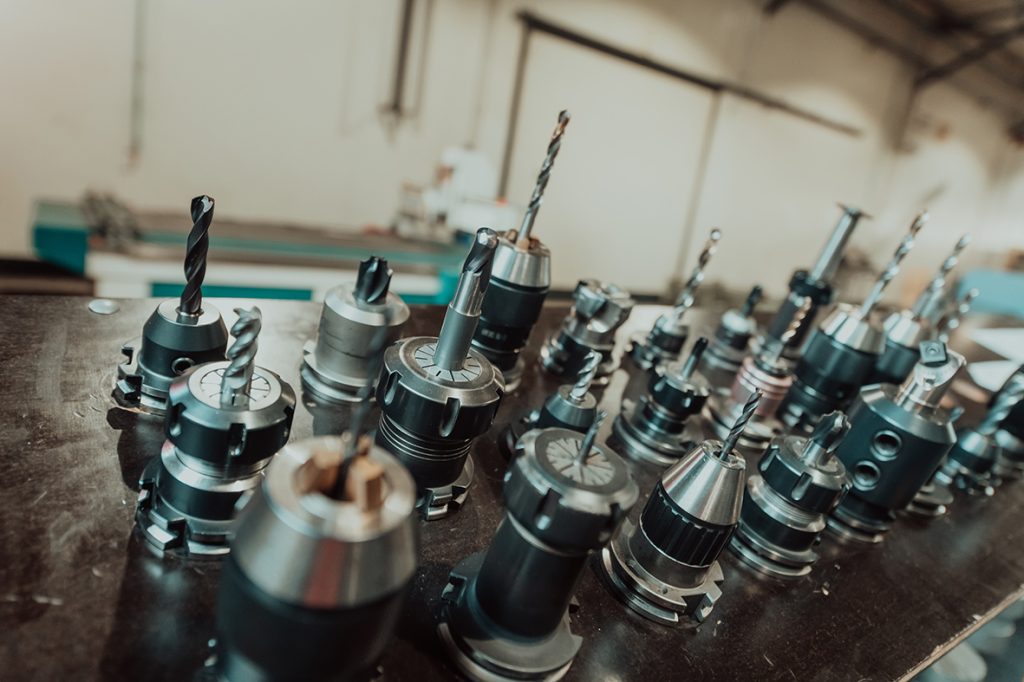
In CNC machining, drill performance is influenced not only by the drill itself but also by the rigidity and precision of the tool holder. For example, PARFAITE hydraulic tool holders significantly reduce drill runout and vibration, ensuring hole accuracy and tool longevity.
Drill Materials and Their Properties
Drill material determines cutting performance and tool life:
‧High-Speed Steel (HSS): Offers good toughness and versatility, suitable for general metal and wood drilling.
‧Cobalt High-Speed Steel (HSS-Co): Provides higher heat and wear resistance, ideal for stainless steel or hard steels.
‧Carbide: High hardness and wear resistance, capable of maintaining stability in high-speed and high-volume CNC operations.
For specialized applications, PCD (Polycrystalline Diamond) and CBN (Cubic Boron Nitride) drill bits are also available. Although these superhard tools come at a higher cost, they excel in machining aluminum alloys, carbon fiber composites, and even hardened steels — delivering exceptional tool life and superior surface quality. When selecting a drill bit, workpiece material, machining conditions, and cost-effectiveness must all be considered together to identify the most suitable solution.
Drill Coatings and Features
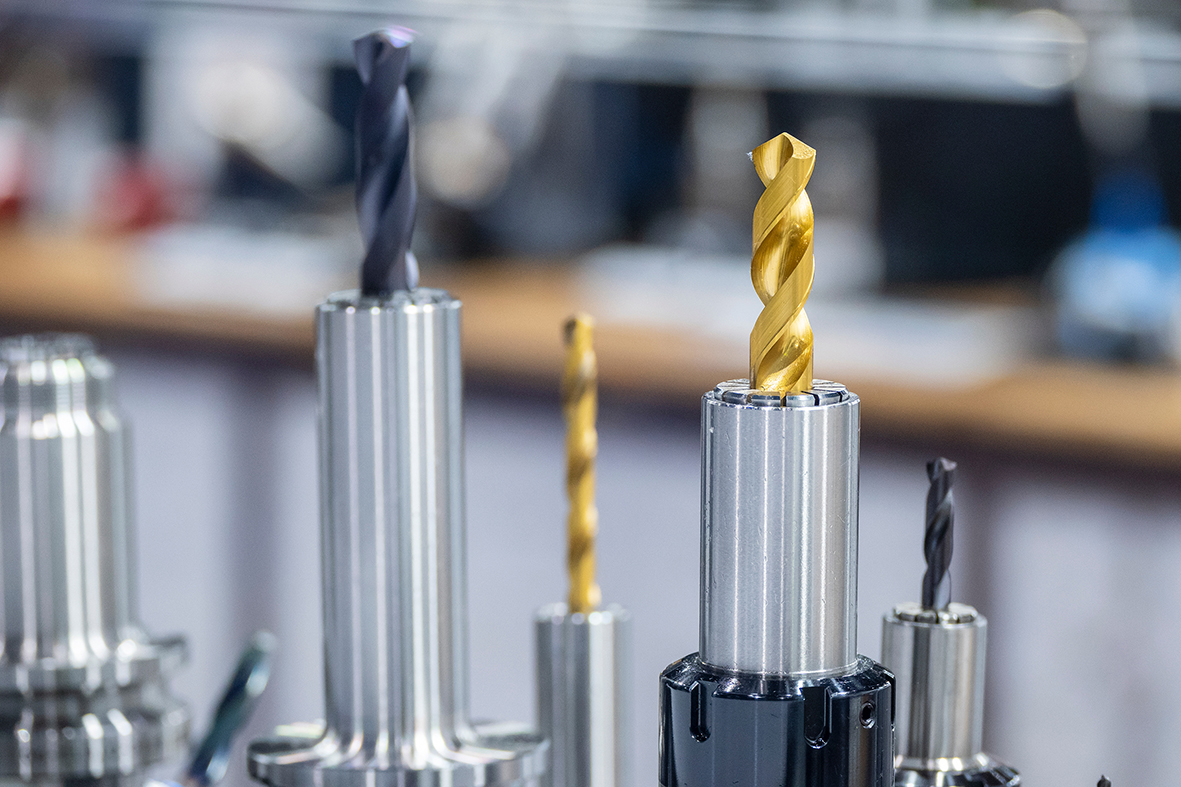
As machining technology advances, drill bit coatings have become a key factor in performance enhancement. The widely used TiN (Titanium Nitride) coating, recognizable by its golden color, offers excellent wear resistance and reduced friction, making it suitable for general-purpose machining. For high-speed cutting or high-temperature environments, TiAlN (Titanium Aluminum Nitride) coating delivers superior performance by maintaining hardness at elevated temperatures and extending tool life. For aluminum alloys and non-ferrous metals, DLC (Diamond-Like Carbon) coating is recommended due to its extremely low friction coefficient, which effectively prevents built-up edge formation. Advanced PVD or PCVD multi-layer coatings are also available, offering a combination of wear resistance and heat resistance — particularly suited for machining high-hardness steels. The choice of coating often determines whether a drill bit can maintain stable performance in demanding machining conditions. For CNC production lines, selecting the right coating not only reduces tool change frequency but also significantly improves overall machining efficiency.
Drill Types and Applications
Different drill designs suit specific machining needs:
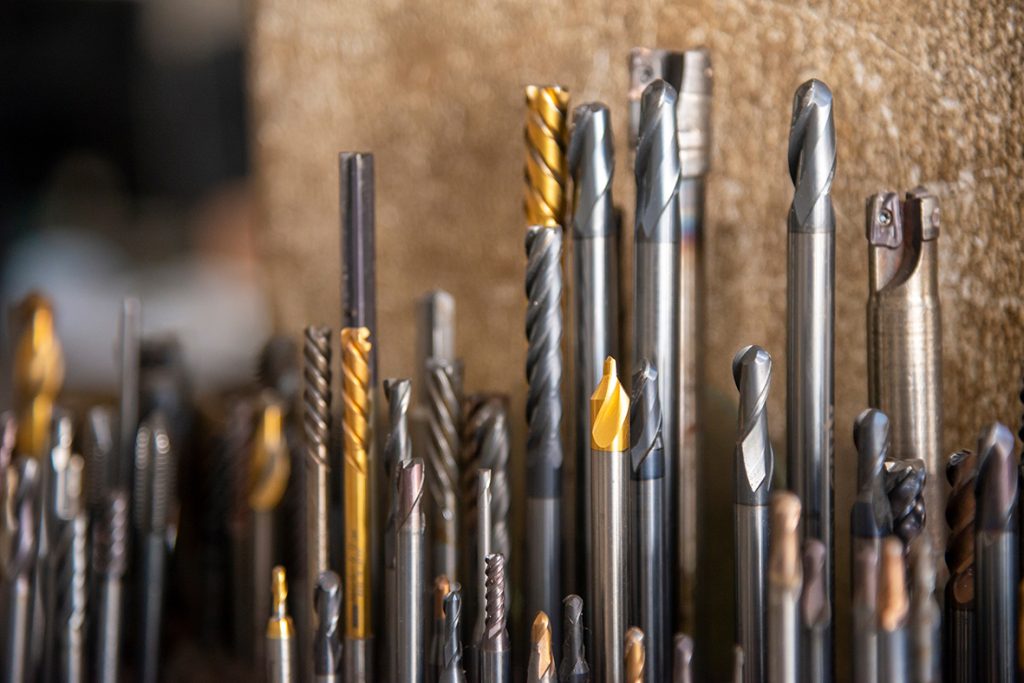
‧Center Drill: Creates accurate starting points and avoids drill wandering.
‧Spot Drill: Used for precise positioning before main drilling.
‧Twist Drill: Simple and versatile, the standard choice for general drilling.
‧Flat-Bottom Drill: Suitable for blind holes or drilling on curved/angled surfaces. ‧Step Drill: Efficient for multi-diameter holes, commonly used in sheet metal.
‧Left-Hand Drill: Designed for removing broken screws or reverse drilling applications.
While their forms vary, the goal remains the same: efficiently produce high-precision holes.
Matching Drills to Workpiece Materials
Choosing the right drill for different materials is essential: ‧Stainless Steel: Tough, prone to built-up edge; use HSS-Co or TiAlN-coated carbide for heat resistance and efficiency. ‧Aluminum: Soft, prone to burrs; DLC-coated drills or polished flute designs improve chip evacuation. ‧Hard Steel: Use carbide or PVD-coated drills for tool longevity. ‧Cast Iron: Brittle; TiN-coated carbide provides wear resistance and stability. ‧Plastics/Composites: Sharp-angle or PCD drills prevent melting, cracking, and burr formation. Proper pairing improves efficiency, reduces tool wear, and ensures optimal machining quality.
Key Considerations for CNC Drill Selection
Selecting drills in CNC environments involves multiple factors: ‧Drill Depth: Deep holes require specialized deep-hole drills with internal coolant to prevent chip clogging. ‧Cooling Method: Internal coolant directs fluid to the cutting point, reducing temperature and improving stability. ‧Tool Holding: Critical for hole accuracy. Standard collets may allow runout, while high-rigidity hydraulic holders reduce vibration and errors. Considering these factors ensures both efficiency and quality, preventing unnecessary costs from improper tool selection.
Choosing the Right Drill for Maximum Efficiency and Quality
In modern manufacturing, selecting the right drill is the first step toward high-quality machining. True drilling performance depends not only on the tool but on the entire system. PARFAITE hydraulic tool holders provide exceptional clamping rigidity and precision, keeping drills stable under high speed and cutting forces. This stability extends tool life, improves hole accuracy, and reduces scrap. For any machining facility pursuing high performance and quality, the right combination of drill and tool holder is key to gaining a competitive advantage.
Get AI Summary