The Key to Precision Machining: Understanding Positioning Accuracy and Repeatability

In the field of CNC machining, precision is the core indicator that determines product quality, machining stability, and overall production efficiency. Among all accuracy specifications, positioning accuracy and repeatability are the most fundamental yet most impactful. These two metrics not only reflect the manufacturing quality of the machine tool itself but also influence tool holders, cutting tools, machining parameters, and long-term production consistency—making them essential for every precision-focused industry.
The Importance of Machine Tool Accuracy
A CNC machine must consistently reach the correct commanded position and repeat the same movement under identical conditions in order to produce high-precision parts. Poor accuracy leads to dimensional deviation, geometric distortion, unstable machining results, and costly scrap.Industries such as mold manufacturing, aerospace, automotive components, and semiconductor equipment demand extremely stable positioning and repeatability to maintain batch-to-batch consistency and ensure every part meets strict tolerance requirements.
What Is Positioning Accuracy?
Positioning accuracy refers to the difference between the commanded position and the actual position after the CNC axis completes its movement.
For example:If the machine is commanded to move 100.000 mm, but the measured result is 99.985 mm, the 0.015 mm difference is the positioning error.Positioning accuracy is affected by:
1.Ball screw accuracy
2.Servo control capability and feedback resolution
3.Structural rigidity
4.Thermal displacement
5.Load and acceleration dynamics
The higher the positioning deviation, the more likely finished dimensions will drift out of tolerance.
What Is Repeatability?
Repeatability indicates the consistency of the machine stopping at the same position under identical conditions, even after repeated movements. It represents the machine’s motion stability and is often considered more important than positioning accuracy.
Even if the machine has a slight positioning error, excellent repeatability allows compensation to maintain machining consistency. Therefore, repeatability is a key determinant of overall machining capability.
Backlash and Reversal Error
Backlash occurs when the CNC axis changes direction—from forward to reverse or reverse to forward—due to mechanical clearance or wear.
1.Entry position deviation
2.Backlash compensation
3.Thermal compensation
4.Deteriorated surface finish
Controlling backlash is critical to achieving stable accuracy.
Methods for Measuring Positioning Accuracy and Repeatability
Methods for Measuring Positioning Accuracy and Repeatability
1.Laser interferometer: Highest precision, industry standard
2.Ballbar system: Fast and effective for circular error analysis
3.Perform multiple forward and backward positioning tests
Typical measurement workflow:
1.Warm up the machine to thermal equilibrium
2.Select measurement stroke
3.Perform multiple forward and backward positioning tests
Calculate averages and maximum deviations Compare with standard requirements
Error Compensation and Accuracy Enhancement
Modern CNC controllers offer advanced compensation functions, such as:
1.Pitch error compensation
2.Backlash compensation
3.Thermal compensation
4.Geometric error compensation
By inputting measured data, the controller can automatically correct axis errors and significantly improve positioning accuracy.
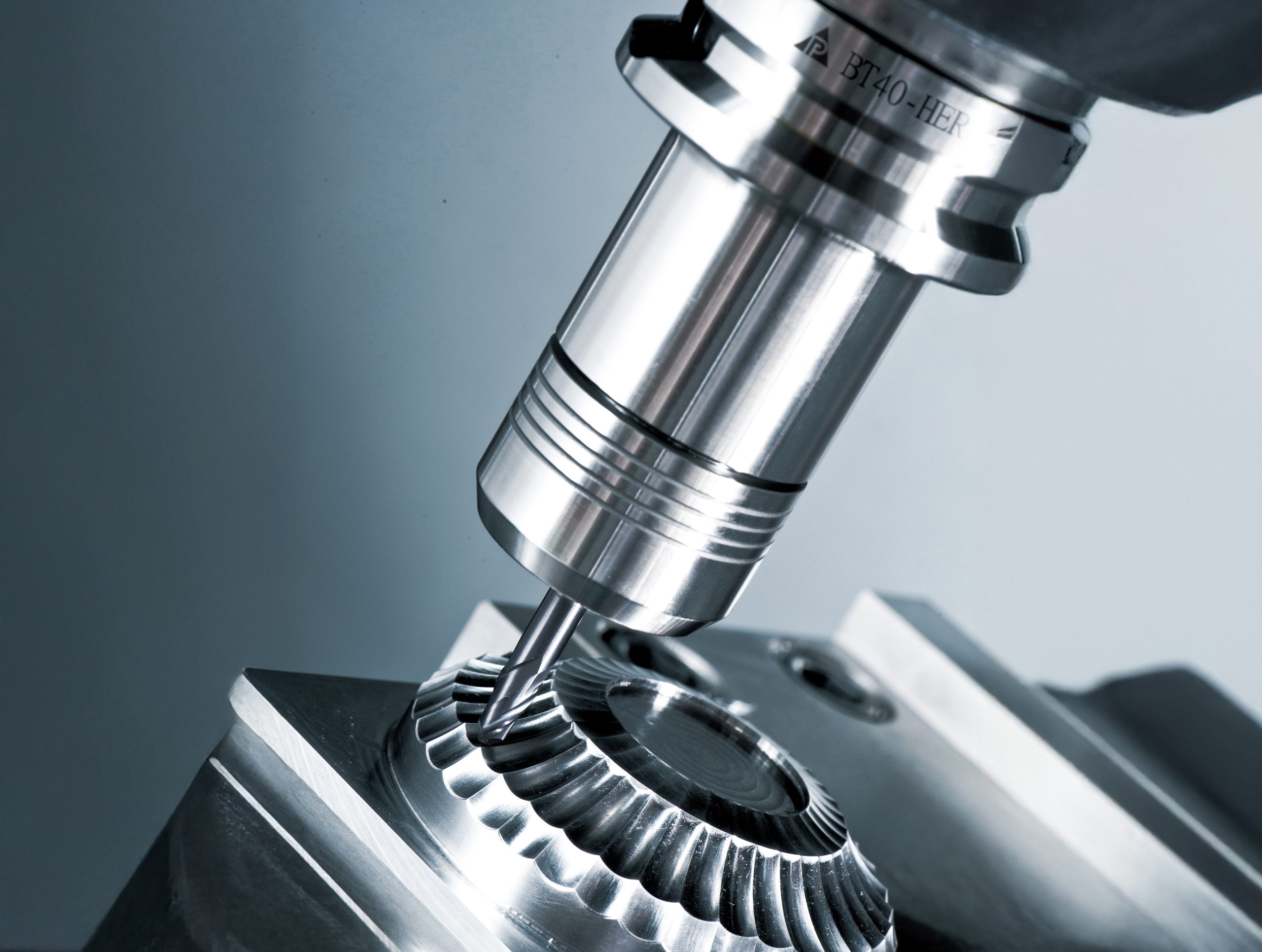
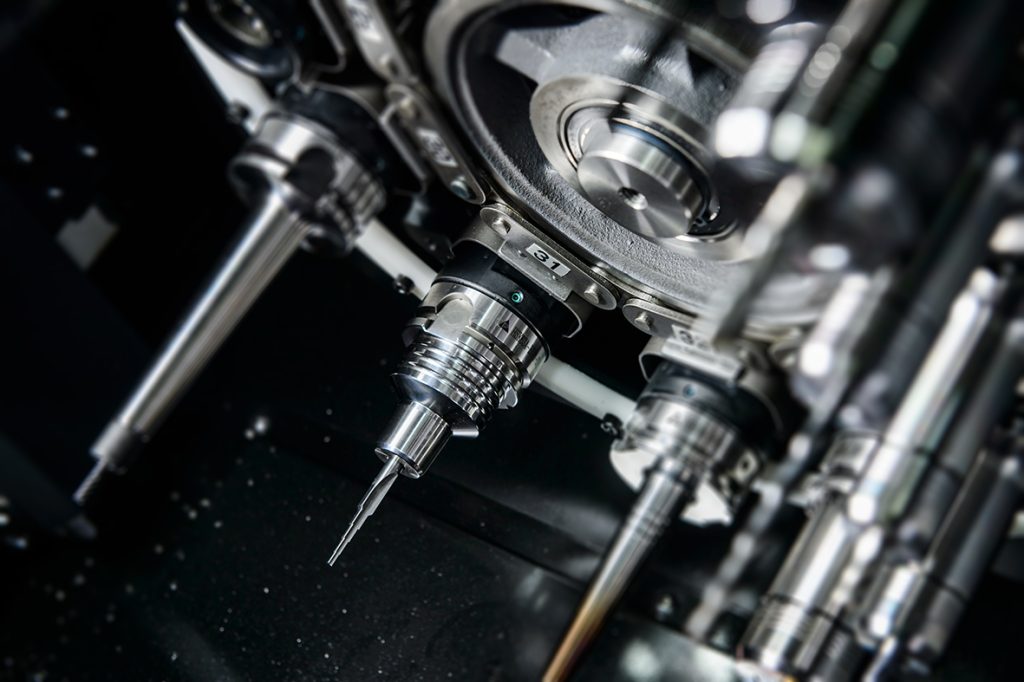
Improving Machining Accuracy with PARFAITE Hydraulic Tool Holders
Beyond the machine itself, the tool holder—the closest component to the workpiece—has a direct influence on actual machining accuracy.
PARFAITE hydraulic tool holders offer several advantages that significantly enhance system precision:
1.Ultra-high 3 µm runout with true 360° hydraulic clamping
2.Hydraulic damping reduces vibration and minimizes cumulative error
3.Quick and stable clamping ensures excellent repeatability
4.Maintains high accuracy even at 4× diameter overhang (up to 80 mm)
5.AT3 taper or 85% contact surface improves spindle–holder rigidity
When a high-precision machine pairs with a premium tool holder, the system achieves better machining consistency, extended tool life, and higher reliability in micron-level operations.
Comparison of International Standards
Common global accuracy standards include:
1.ISO 230-2 – The most widely used method for linear axis positioning and repeatability
2.VDI 3441 (Germany) – Emphasizes statistical analysis and confidence intervals
3.JIS 6336 (Japan) – Widely adopted in Asia, similar to ISO
4.GB 10931-89 (China) – Based on China’s machine tool industry specifications
Although the details differ among standards, their core objective is the same:
to evaluate the machine’s ability to reach the commanded position and maintain stable, predictable performance.